Why Hands-On Corporate Experiences Matter More Than Ever
Since 2020, the modern workplace has transformed dramatically. Employees are returning to the office, hybrid schedules have become the norm, and companies are continuously searching for meaningful ways to reconnect teams beyond conference rooms and Zoom calls. But as organizations bring employees back into high-rise offices and urban workspaces, one thing has become increasingly clear: people are craving genuine human connection and moments that feel grounding, creative, and real.
In cities like Miami, where professionals spend long hours inside sleek office towers surrounded by screens, deadlines, and nonstop notifications, experiential wellness activations are becoming more than just a trend — they are becoming an essential part of company culture.
According to workplace research, collaboration, communication, and connection between colleagues are among the top areas employees feel companies still need to improve, even after returning to in-office work. In fact, 85% of employees surveyed said organizations could do more to improve the employee experience.
The reason is simple: being physically present in an office does not automatically create engagement. What truly builds connection are shared experiences.
That is why hands-on corporate wellness events are seeing a major rise. Activities like planting seeds, painting, candle making, or creating custom bath scrubs allow employees to temporarily step away from the pressures of the workday and reconnect with themselves and each other in a more organic way. No screens. No awkward icebreakers. No forced networking exercises. Just a shared creative experience that encourages mindfulness, conversation, and presence.
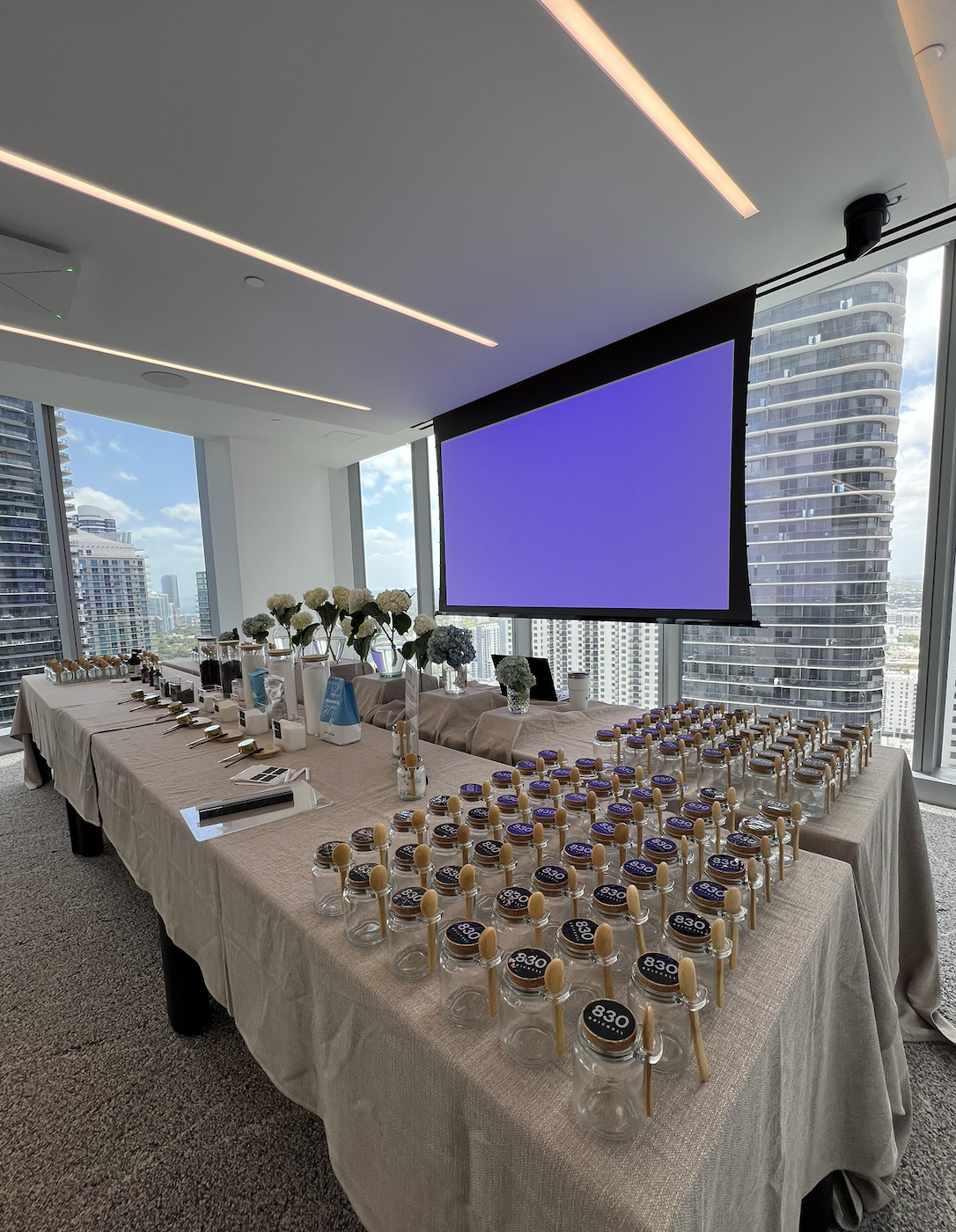
At the luxury office tower 830 Brickell, located steps from Brickell City Centre, employees from several different companies recently came together for an afternoon focused entirely on wellness and creativity through a guided DIY salt scrub experience.
And what makes an experiential corporate event even more impactful? Branding.
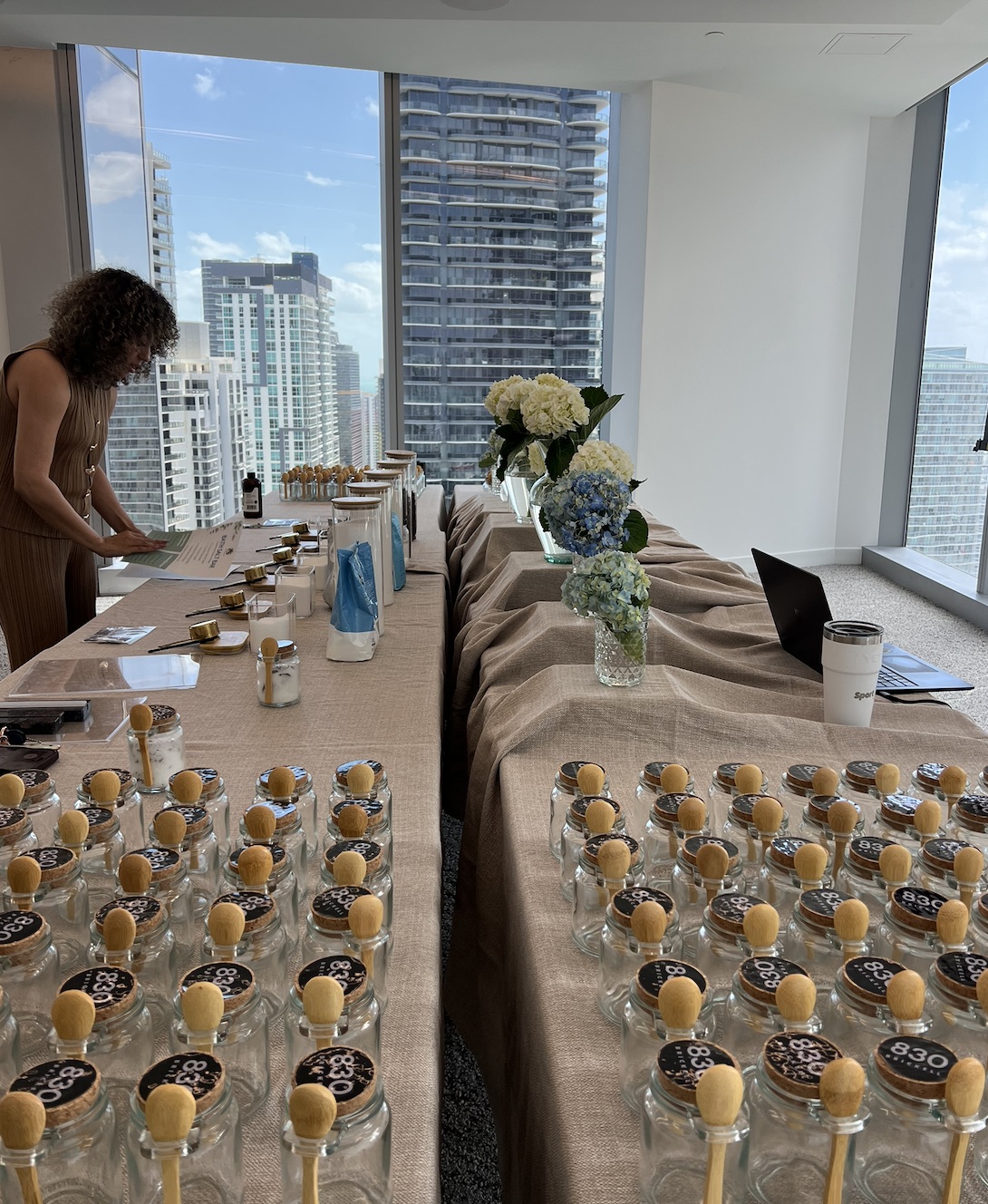
From start to finish, every detail remained cohesive and intentional. The custom jars featured the 830 Brickell logo on top, reinforcing the building’s identity while elevating the activation into a luxury branded experience rather than simply a craft station. The setup itself played a major role in drawing employees in. Designed to feel approachable, elevated, and interactive, the station invited guests to create at their own pace while still offering guided instructions throughout the process.
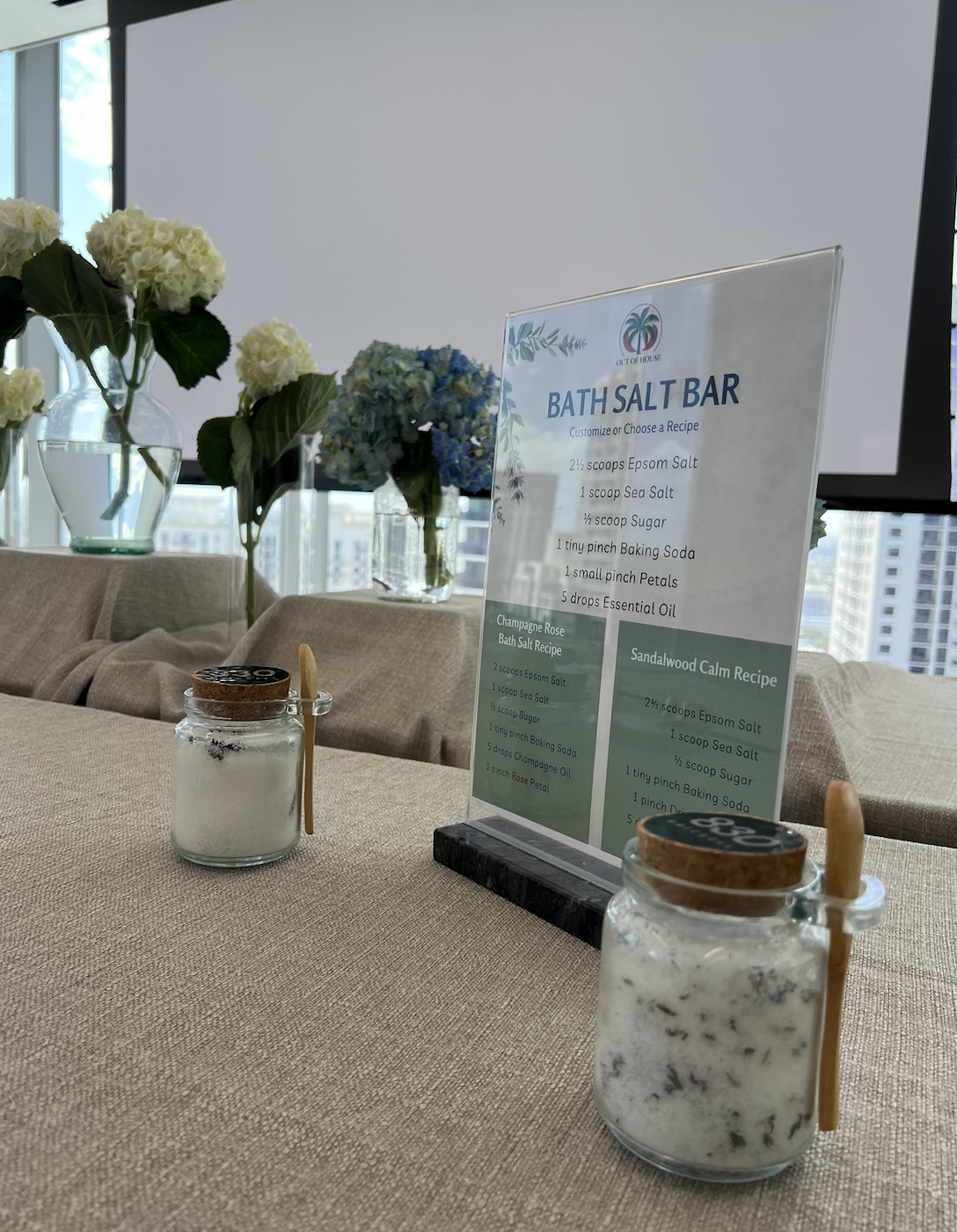
The experience began with choice — a small but important detail in experiential design. Employees selected between two signature scents: Champagne Rose Petal or Sandalwood. Instantly, the activation became personal. Guests leaned in to smell the fragrances, compare favorites with coworkers, and discuss which direction they wanted their scrub to take.
From there, the creation process began.
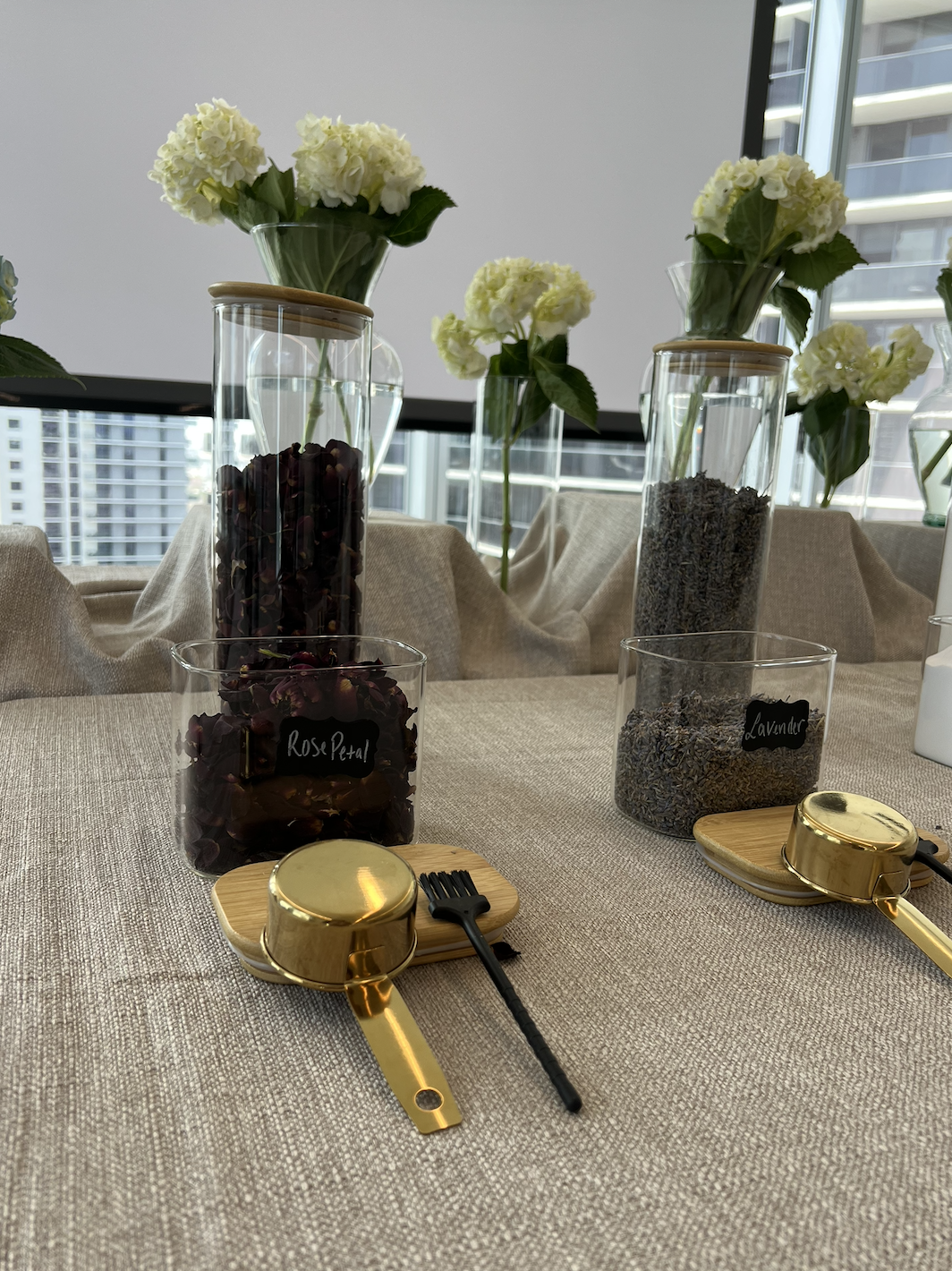
Starting with Epsom salt as the base, participants layered in sea salt, sugar, and baking soda before customizing their jars with fresh rose petals or lavender. A few drops of essential oil completed the experience, transforming simple ingredients into a luxurious self-care product they had created entirely with their own hands.
What made the activation so effective was not just the finished product — it was the process itself.
For a brief moment during the workday, employees slowed down. Conversations happened naturally. Coworkers connected without presentations or meeting agendas. People became immersed in something tactile and sensory, allowing them to reset mentally while engaging creatively.
As more companies rethink what the office experience should feel like, these types of intentional activations are becoming increasingly valuable. Research continues to show that employees want workplaces centered around collaboration, community, and wellbeing rather than simply attendance mandates.
The future of corporate events is no longer about simply gathering people in a room. It is about creating experiences that people can feel, participate in, and remember long after the event ends.